The Social Security Disability Insurance program provides monthly benefits to millions of Americans who are unable to work due to a qualifying disability. These payments are managed by the Social Security Administration, which sets a structured payment calendar each year.
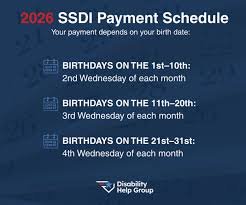
The exact date a beneficiary receives their payment depends on their birth date. For people whose birthdays fall between the 11th and the 20th of any month, SSDI payments are issued on the third Wednesday of each month.
This payment structure has been used for many years to help distribute benefit payments throughout the month. It ensures the agency can process deposits efficiently for tens of millions of recipients.
Understanding the 2026 SSDI schedule for Birthday Group 2 helps recipients plan rent, medical costs, and everyday expenses.
SSDI 2026 Payment Dates for Birthdays From the 11th to the 20th
If your birthday falls between the 11th and the 20th, your SSDI payment arrives on the third Wednesday of each month.
Below are the expected SSDI payment dates for 2026:
- January 21, 2026
- February 18, 2026
- March 18, 2026
- April 15, 2026
- May 20, 2026
- June 17, 2026
- July 15, 2026
- August 19, 2026
- September 16, 2026
- October 21, 2026
- November 18, 2026
- December 16, 2026
These dates follow the official Social Security rule for Birthday Group 2 beneficiaries.
Payments are usually sent by direct deposit to a bank account or to the Direct Express debit card used for federal benefits.
How the SSDI Birthday Payment System Works
The Social Security Administration created the birthday payment system to manage monthly benefits more efficiently.
The system divides beneficiaries into three groups:
- Birthdays from the 1st to the 10th receive payments on the second Wednesday
- Birthdays from the 11th to the 20th receive payments on the third Wednesday
- Birthdays from the 21st to the 31st receive payments on the fourth Wednesday
This schedule applies to most disability, retirement, and survivor beneficiaries who started receiving benefits after May 1997.
The system helps the SSA avoid sending all payments at once, which could slow down processing.
Who Receives SSDI Payments on a Different Date?
Not all SSDI beneficiaries follow the Wednesday payment schedule.
Some people receive their payment on the 3rd of each month instead. This applies mainly to individuals who:
- Began receiving Social Security benefits before May 1997
- Receive both SSDI and Supplemental Security Income
- Have certain special benefit situations
When the 3rd of the month falls on a weekend or federal holiday, the payment is issued on the previous business day.
How to Check Your SSDI Payment Status
The easiest way to track your SSDI payment is through your personal online Social Security account.
Through this portal you can:
- Confirm your payment date
- Review your monthly benefit amount
- Track payment history
- Update bank or direct deposit information
- Download benefit verification letters
The SSA encourages beneficiaries to use the online account system because it provides fast access to benefit information without visiting a field office.
If you prefer phone support, you can call the Social Security national number at 1-800-772-1213.
What Happens If Your SSDI Payment Is Late?
Most SSDI payments arrive on time because they are sent electronically. However, banking delays or technical issues can sometimes slow the deposit.
If your payment does not appear on the expected date, the Social Security Administration recommends waiting three business days before reporting the issue.
After that period, you should contact your bank or the SSA to investigate the delay.
In most cases, the issue is resolved quickly once the payment is traced.
How Direct Deposit Works for SSDI Benefits
The federal government requires most Social Security benefits to be delivered electronically.
Direct deposit allows the Social Security Administration to transfer funds directly into your bank account.
Another option is the Direct Express debit card, which works like a prepaid government benefits card.
Electronic payments offer several advantages:
- Faster access to monthly benefits
- Reduced risk of stolen or lost checks
- Automatic monthly deposits
You can sign up or update direct deposit information through the SSA portal.
Changes typically take one or two payment cycles to appear.
How the 2026 COLA Increase Affects SSDI Payments
Each year, Social Security benefits may increase through a cost of living adjustment, also called COLA.
For 2026, the Social Security Administration announced a 2.8 percent COLA increase. This adjustment helps disability and retirement benefits keep pace with rising consumer prices.
The increase is automatically applied to SSDI benefits starting with January payments.
The average SSDI payment varies based on a worker’s earnings history, but many beneficiaries receive benefits around the mid $1,500 range per month.