Millions of Americans receive monthly disability benefits through the Social Security Disability Insurance program. These payments are managed by the Social Security Administration, which publishes a yearly payment calendar for beneficiaries.
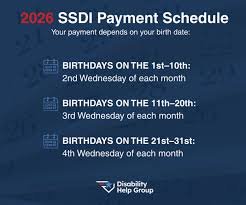
The date when you receive SSDI depends on your birth date and when you first started receiving benefits. For most people whose birthdays fall between the 21st and the 31st, the monthly payment arrives on the fourth Wednesday of each month.
This schedule helps the Social Security Administration process millions of payments in stages throughout the month. It reduces delays and ensures that deposits move smoothly through the banking system.
Understanding the 2026 SSDI payment schedule for Birthday Group 3 helps beneficiaries manage rent, medical bills, and other monthly expenses.
SSDI 2026 Payment Dates for Birthdays From the 21st to the 31st
If your birthday falls between the 21st and the 31st of any month, your SSDI payment is issued on the fourth Wednesday of each month.
Below are the expected SSDI payment dates for 2026:
- January 28, 2026
- February 25, 2026
- March 25, 2026
- April 22, 2026
- May 27, 2026
- June 24, 2026
- July 22, 2026
- August 26, 2026
- September 23, 2026
- October 28, 2026
- November 25, 2026
- December 23, 2026
These dates follow the official Social Security payment rules for Birthday Group 3.
Most beneficiaries receive payments through direct deposit into a bank account. Others receive their benefits through the Direct Express debit card program.
How the SSDI Birthday Payment System Works
The Social Security Administration divides SSDI beneficiaries into three payment groups based on their birth dates.
The system works like this:
- Birthdays from the 1st to the 10th receive payments on the second Wednesday
- Birthdays from the 11th to the 20th receive payments on the third Wednesday
- Birthdays from the 21st to the 31st receive payments on the fourth Wednesday
This system applies to most retirement, survivor, and disability benefits issued by the SSA.
The schedule was introduced to prevent payment processing delays. Sending benefits on several Wednesdays throughout the month allows the agency to handle deposits more efficiently.
Who Receives SSDI Payments on the 3rd of the Month?
Some SSDI beneficiaries do not follow the Wednesday payment schedule.
Payments may arrive on the 3rd day of each month for people who:
- Started receiving Social Security benefits before May 1997
- Receive both SSDI and Supplemental Security Income
- Have special benefit arrangements handled differently by the SSA
If the 3rd falls on a weekend or federal holiday, the payment is issued on the previous business day.
How to Check Your SSDI Payment Status
The fastest way to confirm your payment details is through a personal Social Security online account.
Inside your account you can:
- Confirm upcoming payment dates
- View your monthly benefit amount
- Track previous payments
- Update direct deposit information
- Download official benefit letters
The Social Security Administration recommends using this online system because it allows beneficiaries to manage their accounts without visiting a local office.
For additional assistance, beneficiaries can call the SSA national help line at 1-800-772-1213.
What Happens If Your SSDI Payment Is Late?
Most SSDI payments arrive on time because they are sent electronically.
However, delays can sometimes occur because of banking processing times or account changes.
If your payment does not appear on the scheduled date, the Social Security Administration recommends waiting three business days before reporting the problem.
After this period, beneficiaries should contact their bank or the SSA.
The SSA can trace the payment and confirm whether the deposit has been issued.
How Direct Deposit Works for SSDI Benefits
The federal government requires most Social Security payments to be delivered electronically.
Direct deposit transfers the benefit directly into a checking or savings account each month.
Beneficiaries who do not have a bank account can receive their payment through the Direct Express debit card, which works like a prepaid benefits card.
Electronic payments offer several benefits:
- Faster access to funds
- Reduced risk of lost or stolen checks
- Automatic monthly deposits
Any changes to payment methods may take one or two payment cycles before they appear.
How the 2026 COLA Increase Affects SSDI Payments
Social Security benefits are adjusted each year through a cost of living adjustment, also known as COLA.
The Social Security Administration announced a 2.8 percent COLA increase for 2026. This increase helps disability benefits keep up with inflation and rising living costs.
The adjustment is automatically applied to monthly SSDI payments beginning in January.
The exact benefit amount depends on a worker’s past earnings and work credits, which determine the final monthly disability benefit.