Medicare coverage helps millions of older adults and people with disabilities pay for hospital and medical services. However, Medicare premiums and out‑of‑pocket costs can still be a burden.
Federal and state programs exist to help low‑income Medicare beneficiaries save on these costs. Two of the most impactful are the Qualified Medicare Beneficiary (QMB) and Specified Low‑Income Medicare Beneficiary (SLMB) programs.
These are part of the broader Medicare Savings Programs (MSPs) that can lower or eliminate monthly Medicare costs, including the typical $185 Medicare Part B premium in 2026.
Understanding how these programs work and who qualifies is essential to maximizing your savings.
Medicare Savings Program
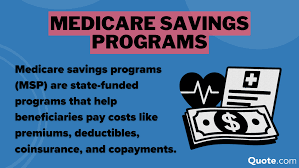
A Medicare Savings Program helps you by paying some or all of your Medicare costs if your income and assets are within certain limits.
These programs are run by your state’s Medicaid agency and are based on federal guidelines.
The main MSPs are: Qualified Medicare Beneficiary (QMB), Specified Low‑Income Medicare Beneficiary (SLMB), Qualifying Individual (QI), and Qualified Disabled and Working Individuals (QDWI).
Benefits and eligibility vary by program.
What Does the QMB Program Cover?
The Qualified Medicare Beneficiary (QMB) program can save you the most money if you qualify. QMB pays:
- Medicare Part A premiums (if you owe them).
- Medicare Part B premiums.
- Medicare deductibles, coinsurance, and copayments for covered services.
Because QMB pays all standard Medicare cost‑sharing, providers are not allowed to bill you for these expenses on Medicare‑covered services.
In other words, QMB can effectively eliminate your Medicare premiums and out‑of‑pocket costs, a significant financial relief for many beneficiaries.
What Does the SLMB Program Cover?
The Specified Low‑Income Medicare Beneficiary (SLMB) program focuses on paying the Medicare Part B premium only. For most people in 2026 this premium is about $185 per month.
SLMB does not cover deductibles, copayments, or coinsurance, but the savings on Part B premiums alone can exceed $2,200 annually.
SLMB requires that you have both Medicare Part A and Part B to be eligible.
Who is Eligible for QMB and SLMB in Alabama?
Eligibility for both QMB and SLMB depends on your monthly income and resources.
Alabama follows federal income thresholds for Medicare Savings Programs in 2026.
These figures are slightly higher than older income limits and are adjusted each year.
QMB Eligibility 2026 (Federal Limits)
- Individual monthly income: up to about $1,350
- Married couple monthly income: up to about $1,824
- Resource limits: approximately $9,950 for an individual and $14,910 for a couple
SLMB Eligibility 2026 (Federal Limits)
- Individual monthly income: up to about $1,616
- Married couple monthly income: up to about $2,184
- Resource limits: same $9,950 / $14,910 resource caps
These federal limits apply to most states including Alabama. Your state may not enforce resource limits for MSPs, which can make it easier to qualify.
In Alabama, Medicare Savings Programs do not count resources such as your home or vehicle, although income still matters.
How the Medicare Savings Programs Work in Alabama
In Alabama, the Alabama Medicaid Agency administers Medicare Savings Programs. To qualify you must:
- Live in Alabama.
- Be entitled to Medicare Part A.
- Meet the income criteria for the program you want.
- Submit an application through your local Medicaid office.
Apply using the official Form 211 provided by the Alabama Medicaid Agency.
This form allows Medicaid to determine which MSP you qualify for and begins your benefits once approved.
How Much Can You Save in 2026?
If you qualify for SLMB in 2026, Medicaid will pay your $185 Part B premium each month. Over a year this amounts to about $2,220 in savings.
For QMB, savings can be much higher because it covers most Medicare cost‑sharing.
Do You Have to Reapply Every Year?
Yes. Medicare Savings Program eligibility must be verified annually.
You will likely need to submit updated income documentation each year to confirm you still qualify for QMB, SLMB, or another MSP.
Your local Medicaid office will provide instructions for renewal.
Can You Lose Your Medicare Savings Benefits?
You can lose eligibility if your income increases above the program limits or if you move out of Alabama.
If your financial situation changes, report it to your Medicaid office promptly to avoid improper benefits.
What Other Help Might You Receive?
If you qualify for QMB or SLMB, you automatically qualify for Medicare’s Extra Help program, which lowers prescription drug costs under Medicare Part D.
Extra Help can reduce premiums, deductibles, and copayments for your drug coverage.