Medicaid in Alaska provides government‑funded health insurance to low‑income residents who meet federal and state eligibility rules. It serves children, parents and caregivers, pregnant women, adults without dependent children, seniors, people with disabilities, and other qualifying groups.
The program is run jointly by the federal government and the State of Alaska through the Division of Public Assistance under the Department of Health.
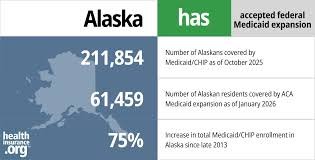
Alaska also expanded Medicaid under the Affordable Care Act to cover more adults with low income.
What Income Limits Apply for Alaska Medicaid in 2026?
Income limits for Medicaid in Alaska vary by eligibility category. Most people qualify based on income as a percentage of the Federal Poverty Level (FPL). For 2026:
- Children (Denali KidCare): families with income up to about 208% of FPL may qualify.
- Pregnant Women: income up to 230% of FPL may qualify and coverage continues for 12 months after birth.
- Adults (19‑64) under the expanded program: income up to 138% of FPL may qualify.
- Aged, Blind, or Disabled groups follow separate income and asset tests. Some categories like SSI recipients automatically qualify.
These limits reflect the income thresholds that Alaska uses for 2026 Medicaid eligibility. Exact dollar amounts change yearly with federal guidelines.
They can be calculated using the officially published poverty levels and rules outlined in state resources.
Who Must Live in Alaska to Be Eligible?
To qualify for Medicaid in Alaska you must be a resident of Alaska. This means living in the state and intending to remain there.
Applicants must prove residency with documentation such as a state ID, lease agreement, utility bills, or other accepted proofs of residence.
Both U.S. citizens and certain qualified non‑citizens may be eligible.
What Categories of People Qualify for Alaska Medicaid?
Alaska Medicaid eligibility is based both on income and category. The main groups include:
- Children under age 19 through programs like Denali KidCare.
- Pregnant women regardless of age, with income limits applied.
- Parents and caretakers in households with dependent children.
- Adults without dependent children under the expanded Medicaid rules (up to age 64).
- People who are elderly (65 and older) or have a qualifying disability.
- People with blindness or permanent disabilities through Special eligibility rules.
Some groups like those receiving Supplemental Security Income (SSI) automatically meet part of the eligibility criteria for Medicaid in Alaska.
What Documents Are Needed to Apply?
When applying for Alaska Medicaid, you need to provide documentation to prove:
- Identity and age (birth certificate, passport, state ID),
- Alaska residency (current address),
- Income and tax information (pay stubs, tax returns),
- Citizenship or immigration status (U.S. birth certificate, green card),
- Household size (to determine income limits).
All required documentation must be submitted with your application whether you apply online, by mail, or in person.
How Do You Apply for Medicaid in Alaska?
There are several ways to apply for Medicaid in Alaska:
1. Apply Online
Use the official portals:
- Apply through HealthCare.gov and the system will route you to Alaska’s Medicaid program if you are eligible.
- Alternatively, apply through the State of Alaska’s services at my.alaska.gov.
2. Apply by Mail or Fax
Paper applications are available from the Division of Public Assistance and you can mail or fax them to your local office.
3. In‑Person Assistance
Visit a local Division of Public Assistance office or community partner that can help complete the application and submit it for you.
Eligibility decisions are made once the Division receives and reviews all documentation. Coverage is retroactive to the first day of the month in which the application is submitted if approved.
What Services Does Alaska Medicaid Cover?
Alaska Medicaid covers a wide range of medically necessary services including:
- Doctor visits,
- Hospital care,
- Preventive care for children,
- Pregnancy‑related services,
- Prescription medications,
- Behavioral health services, and
- Long‑term care options for seniors and people with disabilities.
Specific covered services are detailed under Alaska’s Medicaid State Plan, which is the official agreement outlining benefits and rules used by the state to operate the Medicaid program.
What Is a Medicaid Managed Care or Provider Network?
In Alaska, Medicaid services may be provided by fee‑for‑service or through managed care initiatives such as the Alaska Medicaid Coordinated Care Initiative (AMCCI).
Providers must be enrolled in the Medicaid program to accept Medicaid payments.
You can use the official Medicaid provider directory to find participating doctors and facilities.
What Happens After Enrollment?
Once enrolled, Medicaid members receive a Medicaid card and can use it to get covered services.
Members should show their Medicaid card at each appointment and check that their provider accepts Medicaid.
If other health coverage exists, Medicaid pays only amounts not covered by the primary insurer.
How Often Must Eligibility Be Renewed?
Medicaid eligibility must be renewed periodically. Starting in 2026, many adults enrolled under the expansion group may need eligibility reviews every six months.
Certain individuals, such as Alaska Native or American Indian beneficiaries, caregivers, and medically frail adults, are exempt from these more frequent reviews.
These rules are being implemented under federal law updates affecting Medicaid eligibility processes.