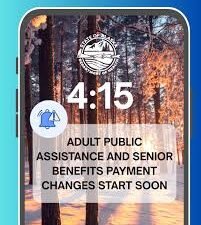

The Alaska Senior Benefits Program provides monthly cash payments to qualifying residents who are age 65 or older and have low to moderate income.
The program is administered by the Alaska Department of Health through the Division of Public Assistance. It is designed to help seniors cover everyday living costs such as food, transportation, and housing expenses.
Eligible seniors can receive monthly payments of $125, $175, or $250 depending on their income level.
These payments are determined using income limits that are tied to Alaska’s federal poverty guidelines and may change each year as the poverty level is updated.
Understanding the income limits for 2026 is important for seniors who want to know whether they still qualify for this monthly assistance.
Alaska Senior Benefits Program
The Alaska Senior Benefits Program is a state funded assistance program for residents aged 65 or older who meet certain income rules. The benefit is paid monthly and is intended to help seniors with low or moderate income remain financially stable.
Payments are based on income tiers. Seniors with the lowest income receive the highest monthly payment, while those with higher income within the program limits receive smaller payments.
The three payment levels are:
- $250 per month for the lowest income group
- $175 per month for the middle income group
- $125 per month for the highest income group within the program limits
These payments are available only if applicants meet the income thresholds established for the program.
What are the income limits for the Alaska Senior Benefits Program in 2026?
The most recent income limits used by the Alaska Department of Health are based on the program guidelines that took effect in 2025 and continue into 2026 unless updated.
For single seniors, the gross annual income limits are:
- Up to $14,663 per year ($1,222 per month) for the $250 monthly benefit
- Up to $19,550 per year ($1,630 per month) for the $175 monthly benefit
- Up to $34,213 per year ($2,852 per month) for the $125 monthly benefit
For married couples, the limits are higher:
- Up to $19,823 per year ($1,652 per month) for the $250 monthly benefit
- Up to $26,430 per year ($2,203 per month) for the $175 monthly benefit
- Up to $46,253 per year ($3,855 per month) for the $125 monthly benefit
These limits are based on gross income before taxes or deductions.
If a senior’s income exceeds the highest threshold, they are not eligible for the program.
Who qualifies for Alaska Senior Benefits?
To receive Senior Benefits, applicants must meet several eligibility requirements set by the Alaska Division of Public Assistance.
Basic eligibility rules include:
- Must be 65 years or older
- Must be a resident of Alaska
- Must be a U.S. citizen or qualified alien
- Must have a Social Security number or proof of application
- Must meet the income limits for the program
Unlike some assistance programs, the Senior Benefits Program does not count personal assets such as savings when determining eligibility.
This means a senior could still qualify even if they have money in savings or retirement accounts as long as their income stays within the limits.
How do payment levels relate to income?
The program is structured so that seniors with lower income receive higher monthly benefits.
Income thresholds are tied to Alaska’s federal poverty level guidelines:
- The $250 payment corresponds to roughly 75 percent of the federal poverty level
- The $175 payment corresponds to 100 percent of the federal poverty level
- The $125 payment corresponds to 175 percent of the federal poverty level
This structure helps direct the largest payments to seniors who have the greatest financial need.
How can seniors apply for Alaska Senior Benefits?
Seniors can apply through the Alaska Division of Public Assistance using several methods. The easiest way is through the state’s online benefits system.
The application can also be submitted by:
- Fax
- In person at a Division of Public Assistance office
- Phone through the Virtual Contact Center at 800-478-7778
Applicants may need to provide documents showing income sources such as Social Security, pensions, or employment earnings.
Can income changes affect eligibility?
Yes. Because eligibility depends on income, a change in income could affect whether a senior qualifies for the program or which payment level they receive.
For example, if a senior’s income increases above one of the thresholds, their monthly payment may decrease or they may become ineligible.
The Division of Public Assistance reviews income information when applications are submitted and during renewals to make sure recipients still meet the program requirements.
Are there situations where seniors cannot receive benefits?
Even if a senior meets the income limits, there are some situations where payments may not be allowed.
The program does not provide benefits to seniors who live in certain institutions such as:
- Nursing homes
- Correctional facilities
- Alaska Pioneers’ Homes or Alaska Veterans’ Homes
- Institutions for mental disease
These rules exist because residents of those facilities may already receive other forms of government support for housing and care.