
Social Security Disability Insurance (SSDI) provides monthly income to workers who cannot work because of a qualifying disability. The program is managed by the Social Security Administration and is funded through payroll taxes paid by workers and employers.
Each year, SSDI benefits may increase through a cost of living adjustment. This adjustment helps benefits keep up with inflation and rising costs.
For 2026, SSDI payments increased by about 2.8 percent following the annual COLA update announced by the Social Security Administration. The adjustment applies automatically to all SSDI beneficiaries.
The increase affects monthly benefit amounts and payment schedules beginning in January 2026.
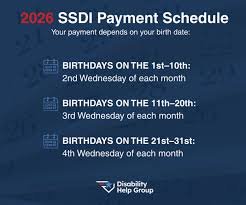
SSDI payments are sent based on the recipient’s birth date, and most beneficiaries receive their deposits on a Wednesday each month.
How much is the SSDI COLA increase for 2026?
The Social Security Administration applies a cost of living adjustment each year when inflation increases the cost of goods and services.
For 2026, SSDI benefits increased by approximately 2.8 percent. This increase raises the monthly payment for millions of Americans who receive disability benefits.
The COLA is based on changes in the Consumer Price Index for Urban Wage Earners and Clerical Workers. When inflation rises, Social Security payments are adjusted to maintain purchasing power.
The adjustment takes effect with benefits paid starting in January 2026.
Recipients do not need to apply for the increase. The Social Security Administration automatically updates payments for all eligible beneficiaries.
When are SSDI payments sent each month?
SSDI payments follow a monthly schedule based on the beneficiary’s birth date.
Most recipients receive their payment on a Wednesday according to this system:
- Birth dates from the 1st to the 10th receive payment on the second Wednesday of the month
- Birth dates from the 11th to the 20th receive payment on the third Wednesday
- Birth dates from the 21st to the 31st receive payment on the fourth Wednesday
This schedule applies to people who started receiving benefits after May 1997.
If a scheduled payment date falls on a federal holiday, the payment is usually sent on the previous business day.
What are the SSDI payment dates for January 2026?
The first SSDI payments reflecting the 2026 COLA were issued in January 2026.
Payments were distributed on the following dates:
- January 14, 2026 for beneficiaries with birthdays between the 1st and 10th
- January 21, 2026 for beneficiaries with birthdays between the 11th and 20th
- January 28, 2026 for beneficiaries with birthdays between the 21st and 31st
These dates follow the standard Wednesday payment schedule used by the Social Security Administration.
Beneficiaries who began receiving benefits before May 1997 usually receive their payment on the third day of each month instead of the Wednesday schedule.
Who qualifies for SSDI benefits?
SSDI is designed for workers who paid Social Security taxes and later developed a medical condition that prevents them from working.
To qualify for SSDI, applicants must generally meet two main requirements:
- They must have earned enough work credits through Social Security payroll taxes
- They must have a disability that meets the Social Security Administration’s medical definition
The disability must be expected to last at least 12 months or result in death. The condition must also prevent the person from performing substantial work.
Medical evidence and employment history are usually required when applying for SSDI benefits.
How can I check my SSDI payment amount?
SSDI recipients can view their monthly benefit amount and payment history using the official Social Security online portal.
The secure portal allows beneficiaries to:
- Check their payment amount after the COLA increase
- Confirm upcoming deposit dates
- Download benefit verification letters
- Update direct deposit information
Creating an account is free and allows beneficiaries to manage many Social Security services online without visiting a local office.
Why do some SSDI recipients receive payments on different dates?
Payment timing depends on several factors related to when the beneficiary started receiving benefits.
People who began receiving Social Security benefits before May 1997 are usually paid on the third day of each month.
People who started receiving benefits after May 1997 follow the Wednesday payment schedule based on birth dates.
This system helps the Social Security Administration distribute millions of payments more efficiently throughout the month.
What should I do if my SSDI payment is late?
If a payment does not appear on the expected date, the Social Security Administration recommends first checking with your bank. Some financial institutions may take extra time to process deposits.
If the payment is still missing after three business days, beneficiaries should contact the Social Security Administration for assistance.
Support options include:
- Calling the national Social Security phone number at 1-800-772-1213
- Visiting a local Social Security office
- Using the online contact portal