
Millions of Americans receive monthly disability benefits through the Social Security Disability Insurance program. The payment date depends mainly on the beneficiary’s birth date.
The schedule is set by the Social Security Administration (SSA) and follows a clear monthly system.
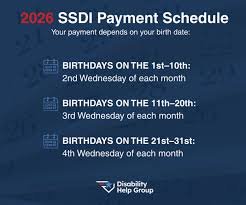
For people whose birthdays fall between the 1st and the 10th of any month, SSDI payments arrive on the second Wednesday of each month.
This schedule applies to most beneficiaries who started receiving Social Security disability benefits after May 1997.
Understanding the 2026 payment schedule helps beneficiaries plan bills, medical costs, and other expenses.
SSDI 2026 Payment Dates for Birthdays From the 1st to the 10th
If your birthday falls between the 1st and the 10th, your SSDI benefits will be paid on the second Wednesday of each month in 2026.
Here are the expected payment dates:
- January 14, 2026
- February 11, 2026
- March 11, 2026
- April 8, 2026
- May 13, 2026
- June 10, 2026
- July 8, 2026
- August 12, 2026
- September 9, 2026
- October 14, 2026
- November 10, 2026
- December 9, 2026
These dates follow the official SSA rule that disability benefits are issued on the second Wednesday for this birthday group. The system helps spread payments across the month so the agency can process millions of deposits smoothly.
Most payments are sent through direct deposit to a bank account or to a Direct Express debit card. The SSA strongly recommends electronic payments because they are faster and more secure.
What Determines Your SSDI Payment Date?
The Social Security Administration uses a birthday based schedule for most retirement, survivor, and disability benefits.
The rules work like this:
- Birthdays from the 1st to the 10th receive payments on the second Wednesday
- Birthdays from the 11th to the 20th receive payments on the third Wednesday
- Birthdays from the 21st to the 31st receive payments on the fourth Wednesday
This schedule has been in place since the late 1990s. It allows the SSA to process payments in stages instead of sending every payment at once.
However, some beneficiaries follow a different schedule. This depends on when they first started receiving benefits.
Who Does Not Follow the Birthday Payment Schedule?
Some SSDI recipients receive their payment on the third day of each month instead of a Wednesday schedule.
This applies to people who:
- Began receiving benefits before May 1997
- Receive both SSDI and Supplemental Security Income
- Have certain state programs paying Medicare premiums in special cases
For these beneficiaries, the monthly payment normally arrives on the 3rd day of the month unless that date falls on a weekend or federal holiday.
When that happens, the payment is issued on the previous business day.
How to Check Your SSDI Payment Status
If you want to confirm your payment date or check whether a deposit has been sent, the easiest method is through your online Social Security account.
Inside your account you can:
- View payment history
- Confirm your monthly benefit amount
- Update direct deposit information
- Download benefit verification letters
- Review notices from the Social Security Administration
This online portal is the fastest way to manage SSDI benefits without visiting a local Social Security office.
The SSA also provides a national phone line for assistance. You can contact them at 1-800-772-1213 during business hours.
What Happens If Your SSDI Payment Is Late?
Most SSDI payments arrive on time because the deposits are processed electronically.
However, delays can sometimes occur because of banking issues or processing errors.
The Social Security Administration recommends taking these steps if your payment does not appear on the expected date:
- Wait at least three business days.
- Contact your bank to confirm whether the deposit is pending.
- If the payment is still missing, contact the SSA directly.
In most cases, the issue is resolved quickly once the bank or SSA reviews the account.
How Does Direct Deposit Work for SSDI Payments?
Direct deposit is the standard payment method used by the Social Security Administration.
Instead of mailing a paper check, the agency transfers the benefit directly into your bank account or Direct Express card.
According to the SSA, electronic payments offer several advantages:
- Faster access to funds
- Lower risk of theft or lost checks
- Automatic deposits every month
Changes usually take one or two payment cycles to take effect.
Can Banks Release SSDI Payments Earlier?
Some banks advertise early access to government benefits. This means the bank may release the deposit one or two days before the official payment date.
However, the Social Security Administration only sends payments on the scheduled date.
If your bank releases funds earlier, it is simply providing early access to the deposit once it receives notice of the incoming payment.
The official SSDI payment date still remains the second Wednesday of each month for beneficiaries with birthdays between the 1st and 10th.
How Much Is the Average SSDI Payment in 2026?
The monthly SSDI benefit varies depending on a worker’s earnings history and work credits.
In 2026, Social Security benefits increased due to a 2.8 percent cost of living adjustment. This adjustment helps benefits keep pace with inflation.
Average disability benefits are typically around the mid $1,500 range per month, although individual payments can be higher or lower depending on lifetime earnings.